
Floating Villages of Ha Long Bay
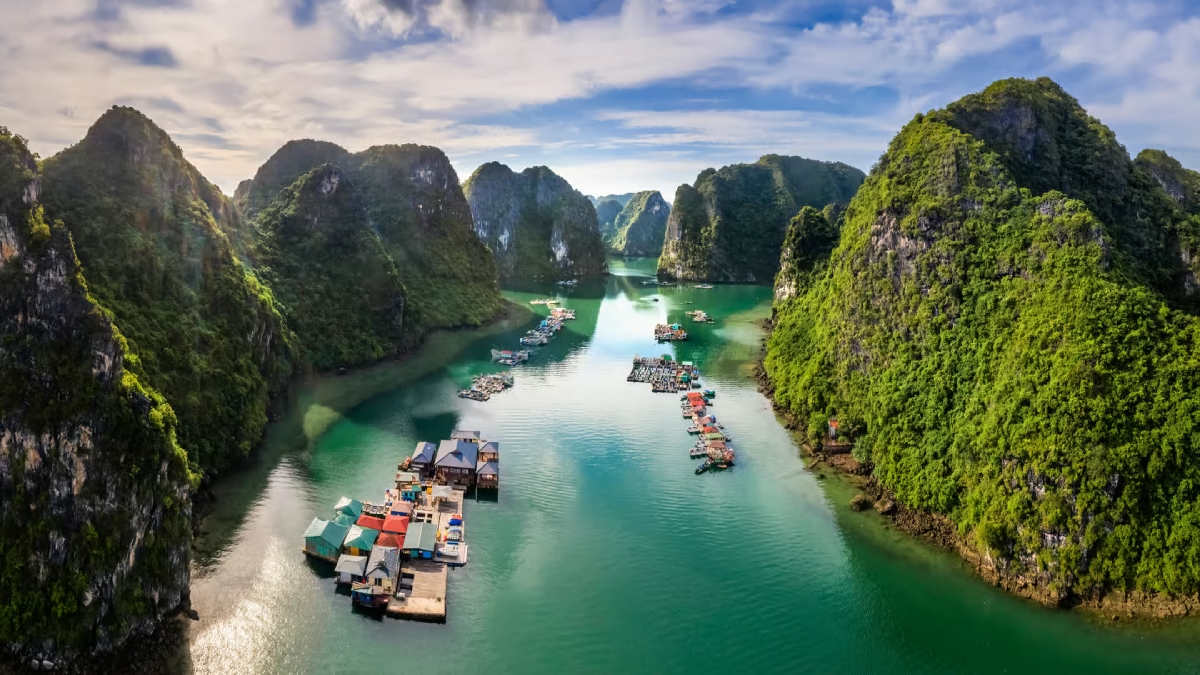
Ha Long Bay has several floating fishing villages — communities that have lived on the water for generations, building wooden houses on floating platforms anchored among the karst islands. The most visited are Vung Vieng Village and Cua Van Village, both within the UNESCO World Heritage Zone. These communities are sustained by fishing, pearl cultivation, and increasingly by tourism. Most residents have been relocated to land-based housing in recent decades under government resettlement programmes, making the remaining floating communities smaller and more fragile than they once were.
The floating villages of Ha Long Bay are among the most photographed and least understood features of the bay landscape. For most cruise passengers, they appear as a cluster of colourful wooden structures among the karsts — striking to photograph, briefly visited, and quickly passed. This guide gives you the context to understand what you are seeing: the history of these communities, how they live, what is changing, and how to approach the visit with appropriate awareness.
The Four Main Ha Long Bay Floating Villages
Vung Vieng Village
Vung Vieng is the most commonly visited floating village on Ha Long Bay cruise itineraries. Located in the Bai Tu Long Bay area, it is accessible on overnight and multi-day cruises that venture into the northeastern sector of the bay. The village is built on floating platforms anchored in a sheltered cove surrounded by karst formations, with approximately 200 to 300 residents at its peak. Most residents have now relocated to land-based housing, and the village is smaller than it was 20 years ago.
Vung Vieng is the most intact of the remaining floating communities — enough residents remain that the village has a functioning character rather than feeling like a preserved exhibit. The houses are wooden, built on floating oil-drum pontoons, and connected by narrow walkways. Fishing equipment, children’s toys, potted plants, and domestic objects are visible on the platforms — the material evidence of daily life.
The village visit typically involves a guided tour by rowing boat or bamboo boat through the village’s internal waterways, with commentary from the guide on how the community lives, fishes, and maintains the floating infrastructure. You will see fish farms (submerged cages where grouper, cuttlefish, and prawns are raised), pearl cultivation nets, and the small school building that serves the village’s remaining children.
Access: Overnight and multi-day cruise itineraries that route into Bai Tu Long Bay. Day cruises from Hanoi do not typically reach Vung Vieng due to the travel distance.
Cua Van Village
Cua Van is Ha Long Bay’s most famous floating village — a UNESCO-recognised “living cultural heritage” community that has been inhabited for more than 200 years. At its peak, the village housed over 170 families. Following government resettlement programmes that began in the early 2000s, the resident population has declined significantly, with most families now living in Ha Long City while maintaining fishing operations on the water.
The village visit at Cua Van includes a cultural house built on floating platforms that provides a small exhibition on the history and way of life of the bay’s water-based communities. Rowing boat tours through the village are available.
Access: Central Ha Long Bay — accessible on some day cruise itineraries and most overnight cruises.
Ba Hang Village
A smaller floating community in the Bai Tu Long Bay area. Less visited than Vung Vieng and Cua Van, Ba Hang has a quieter character — the scale of the community is domestic rather than tourist-facing. Some multi-day cruise itineraries include Ba Hang as an alternative to the more trafficked villages.
Cong Dam Village
Located in the Bai Tu Long Bay National Park area, Cong Dam is among the most remote of the accessible floating villages. The surrounding landscape is wilder than the central bay zone, with the village’s floating structures contrasting with the dense forest of the adjacent islands. Visited primarily on extended multi-day itineraries.
Life in Ha Long Bay’s Floating Villages
Floating village residents traditionally live by fishing — using nets, traps, and hook-and-line methods to catch the grouper, sea bass, shrimp, and cuttlefish that inhabit Ha Long Bay’s waters. Many also maintain pearl cultivation nets, where oysters are grown in submerged cages and harvested for their pearls. Children historically attended school on floating platforms within the village; following resettlement, most now attend schools on the mainland. Fresh water, electricity, and waste management are among the most significant daily challenges of water-based living.
Fishing is the primary livelihood. Residents use traditional wooden boats to set and retrieve nets, traps, and long lines at dawn and dusk. The catch is sold to traders who collect from the villages by boat or transported to Ha Long City’s markets.
Pearl cultivation supplements fishing income for many families. Ha Long Bay pearls — sold under the Hạ Long Pearl designation — are produced in floating farms throughout the bay. The pearl farm visits on many cruise itineraries connect passengers with this industry.
Housing consists of wooden structures built on floating platforms of oil drums, polystyrene, or traditional bamboo. The platforms are anchored to the bay floor with chains and can be repositioned, though most villages have occupied the same coves for generations.
Education has historically been one of the most significant challenges. Children in the more remote villages faced irregular schooling due to the distance from mainland facilities. Government resettlement programmes have moved most school-age children to land-based accommodation, contributing to the declining resident population of the villages.
Ha Long Bay Floating Village Resettlement
Ha Long Bay’s floating villages have been significantly reduced by Vietnamese government resettlement programmes that began in the early 2000s. The programmes aim to improve living conditions — providing residents with land-based housing, running water, electricity, and better access to healthcare and education. Critics argue the resettlement has disrupted traditional culture and livelihoods. Most former floating village residents maintain their fishing operations from the water while living in Ha Long City’s Cái Rồng district.
The floating villages visible to tourists today are smaller and less populous than they were 20 years ago. Understanding this context enriches the visit — what you are seeing is a community in transition, not a static cultural exhibit. The older residents who remain have typically chosen to do so; younger generations have largely moved to shore.
This is not simply a story of decline. The living conditions in many former floating village homes — lacking running water, with children travelling long distances to school, and with no emergency medical access — were genuinely difficult. Resettlement has improved material quality of life for most families. The cultural cost is real; so is the practical improvement.
How to Visit a Ha Long Bay Floating Village
Floating village visits on Ha Long Bay cruise itineraries typically take one of two forms:
Bamboo or rowing boat tour — the most common format. Passengers transfer from the cruise vessel to smaller rowing boats (often rowed by local women), which navigate through the village’s internal waterways while the guide provides commentary. This is a passive but intimate experience — the slow pace of a rowing boat gives you time to observe the details of village life.
Walking tour (where infrastructure allows) — some villages, particularly Cua Van, have floating walkways connecting platforms that allow small guided walking tours. This gives a more active engagement with the space.
Guided kayak approach — on some itineraries, the village approach is made by kayak rather than motorised boat, which is quieter and allows a more exploratory experience.
Respectful behaviour on village visits: – Ask before photographing residents, particularly children and elderly community members – Dress modestly — covered shoulders and knees are appreciated – Do not enter homes or private spaces without explicit invitation – Listen to your guide — they have relationships with the community and will indicate what is and is not appropriate
Which Cruises Include a Floating Village Visit?
Floating village visits are not universally included on Ha Long Bay cruises. They are most common on:
- Overnight (2D1N) cruises that venture beyond the most visited central bay area
- 3-day itineraries, particularly those routing through Bai Tu Long Bay
- Some private cruise itineraries where the guide can customise the routing
Standard day cruises from Hanoi typically do not include a floating village visit due to time constraints. Confirm whether a floating village stop is included in your specific itinerary when booking. The Overnight Bai Tu Long Cruise and 3 Day Ha Long Bay Cruise both access the Bai Tu Long Bay area where Vung Vieng is located.
Frequently Asked Questions
Are Ha Long Bay’s floating villages still inhabited?
Yes — but significantly less so than in previous decades following government resettlement programmes. Vung Vieng retains a meaningful resident population. Cua Van is smaller but still inhabited by some families. The villages are living communities rather than tourist recreations.
Can I visit a floating village on a day cruise?
Most day cruises from Hanoi do not include a floating village visit — the time constraints of a one-day itinerary prioritise caves and kayaking. Some privately guided day tours or itineraries departing from Ha Long City may include a village stop. Check your specific itinerary.
Is it appropriate to photograph people in the floating villages?
Ask before photographing residents — particularly children and elderly community members. General landscape photography of the village structures is widely accepted. Your guide will give specific guidance on photography etiquette for the community you are visiting.
How do children in the floating villages go to school?
Following resettlement programmes, most school-age children from the floating villages now live in land-based housing in Ha Long City or Cái Rồng and attend mainland schools. In the remaining villages, children are typically transported to school by boat. Some villages historically had their own small floating school buildings — Vung Vieng had one — though these have largely been replaced by mainland schooling.
Are the floating villages in Ha Long Bay or Bai Tu Long Bay?
Both. Cua Van Village is in the central Ha Long Bay area. Vung Vieng and Ba Hang villages are in the Bai Tu Long Bay area to the northeast. Cong Dam is in the Bai Tu Long National Park zone. Reaching the Bai Tu Long Bay villages requires an overnight or multi-day cruise that ventures into this less-visited sector.
