
Ha Long Bay Cruise Capsize — Safety Guide
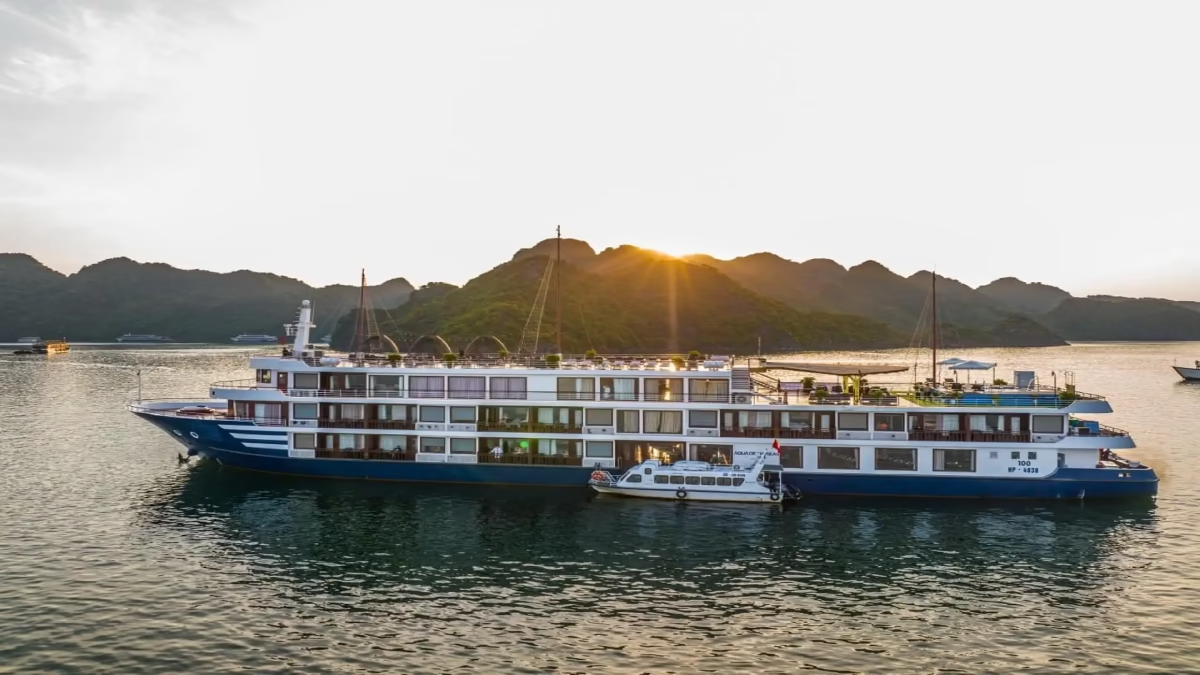
Ha Long Bay cruise boat capsizings and sinkings have occurred, predominantly during severe weather conditions. The risk is real but rare relative to the volume of cruise traffic on the bay. The most significant risk factors are older, poorly maintained budget vessels; severe weather — particularly during typhoon season (July to September); and operator non-compliance with safety regulations. Choosing a licensed operator with a well-maintained vessel, booking through a reputable platform, and avoiding the bay during active typhoon warnings substantially reduces the risk.
The question of whether Ha Long Bay cruises are safe is asked frequently — and deserves an honest, factual answer rather than a reassuring one. This guide covers the documented history of incidents on the bay, the risk factors that increase or reduce the likelihood of a serious incident, how to assess the safety of your specific cruise, what emergency procedures look like on board, and what to do if something goes wrong.
Has a Ha Long Bay Cruise Boat Ever Capsized?
Yes. There have been documented incidents involving Ha Long Bay cruise vessels capsizing or sinking. The most serious incidents have occurred during typhoons and severe storms, when vessels caught on the open water in deteriorating conditions have foundered. There have also been isolated incidents of structural failure on older vessels. Fatal incidents have occurred but are rare relative to the millions of cruise passengers who visit the bay annually.
Specific incidents that have been widely reported include the 2011 capsizing of a tourist junk during a typhoon, which resulted in multiple fatalities, and several subsequent incidents involving smaller vessels in rough weather. Vietnamese marine safety authorities have implemented stricter licensing and inspection requirements in the years following these incidents.
It is important to hold this risk in proportion. Ha Long Bay handles an enormous volume of cruise traffic — hundreds of departures daily across more than 500 licensed operators. The vast majority of cruises complete without incident. The risk of a serious capsize incident is real but statistically low for travellers who choose well-maintained vessels and avoid the bay during active severe weather warnings.
Main Ha Long Bay Cruise Capsize Risk Factors
Severe weather — particularly typhoons (July to September) is the primary risk factor for capsizing incidents on Ha Long Bay. The northern Vietnamese coast is affected by tropical storms between July and September. When a typhoon warning is issued, the Quảng Ninh provincial authority closes the bay to all cruise traffic. The risk is highest when:
- Operators disregard or are unaware of weather warnings and depart despite deteriorating conditions
- Vessels are caught overnight on the water when conditions change rapidly
- Smaller, lighter vessels are exposed to open water in high winds and swell
Older and poorly maintained budget vessels carry a higher structural risk than newer and better-maintained boats. Wooden junk boats degrade over time, and operators who do not invest in maintenance accumulate structural weaknesses that may not be visible to passengers. Budget operators with minimal profit margins are more likely to defer maintenance.
Non-compliance with safety regulations — some operators cut corners on life-saving equipment, fail to carry the required number of life rings or life jackets, or operate with unlicensed captains. These compliance failures increase risk, particularly in emergency situations.
Overcrowding — vessels carrying more passengers than their licensed capacity reduces stability and complicates evacuation in an emergency.
How to Choose a Safer Cruise
The single most effective risk-reduction measure for Ha Long Bay travellers is booking a licensed operator through a reputable platform (GetYourGuide, Viator, or Tiqets) with a well-maintained vessel, a high volume of recent positive reviews, and a departure policy that cancels cruises during adverse weather. Budget is not the primary indicator of safety — a well-reviewed mid-range operator is safer than a poorly-reviewed luxury operator — but extremely cheap cruises carry higher structural risk.
Check the vessel age and maintenance — this is difficult for travellers to assess independently, but reading recent reviews provides useful signals. Comments about rusty fittings, broken safety equipment, or a generally neglected boat are serious red flags. Recent reviews showing consistently clean, well-maintained conditions are a positive indicator.
Book a licensed operator — all Ha Long Bay cruise operators must hold a valid tourism licence. Booking through GetYourGuide, Viator, or Tiqets provides passive verification. If booking directly, request the operator’s licence number.
Avoid travel during active typhoon warnings — check weather forecasts for Quảng Ninh province in the days before your cruise. The Vietnam Meteorological and Hydrological Administration (nchmf.gov.vn) publishes current storm tracking and warnings. If a typhoon is in the region, postpone your cruise.
Book with an operator that has a clear weather cancellation policy — reputable operators cancel proactively and offer full refunds when conditions deteriorate. Operators who pressure guests to depart despite marginal conditions are a warning sign.
Choose a mid-range or above vessel — the structural quality of mid-range and above cruise boats is generally significantly better than the cheapest budget options. This does not eliminate risk, but it reduces it.
Ha Long Bay Cruise Safety Equipment: What Should Be on Board
Upon boarding any Ha Long Bay cruise, take note of the following:
- Life jackets — should be available for every passenger, including children. They should be accessible from the deck, not locked away. Check that they are not visibly degraded or missing fasteners.
- Life rings — throw rings mounted on the deck railings are standard on all licensed vessels.
- Fire extinguishers — should be visibly mounted in the kitchen, engine room access area, and at least one on the main passenger deck.
- Emergency exits — know where they are before the boat leaves the dock. On overnight cruises, walk the corridor to the emergency exits from your cabin before going to sleep.
- First aid kit — should be accessible to the crew.
- Radio and emergency communication — licensed vessels are required to carry maritime communication equipment.
Warning: If life jackets are not available for all passengers, or if the crew cannot quickly direct you to emergency equipment when asked, these are serious safety concerns. Raise them with the guide immediately and, if not resolved, consider not boarding.
What to Do in a Ha Long Bay Cruise Capsize Emergency
Capsize emergencies on Ha Long Bay are rare — but knowing what to do before one happens is worthwhile, particularly for overnight cruise guests.
If the boat begins to list or shows signs of distress: – Move immediately to the open deck if you are below – Put on a life jacket — do not wait for instruction if the situation is deteriorating rapidly – Listen to crew instructions — experienced captains know evacuation procedures – Do not re-enter a sinking vessel for possessions
If the vessel capsizes: – Stay with the boat if possible — capsized hulls float and provide a reference point for rescuers – Stay calm and conserve energy in the water — Ha Long Bay is sheltered, water temperatures are warm for most of the year – Signal to other vessels — Ha Long Bay has significant boat traffic and rescue response times are generally short – Life jackets provide buoyancy — do not remove yours in the water
Emergency contacts in Vietnam: – Coast Guard: 1800 599 910 (toll-free) – Police: 113 – Ambulance: 115 – Search and Rescue: 112
What Ha Long Bay Cruise Authorities Have Done Since Major Incidents
Following serious capsize incidents on the bay, Vietnamese maritime authorities and the Quảng Ninh provincial authority have implemented several reforms:
- Stricter annual vessel inspection requirements for all licensed cruise boats
- Mandatory life jacket checks and passenger safety briefings at the time of boarding
- Enhanced weather monitoring and bay closure protocols during typhoon warnings
- Increased penalties for operators who violate passenger capacity limits or safety equipment requirements
- A phased programme to retire older wooden vessels below minimum safety standards
These measures have improved the regulatory framework, though enforcement remains uneven. Booking through reputable platforms provides an additional layer of quality control beyond official regulation.
Frequently Asked Questions
Is it safe to take a Ha Long Bay cruise?
Yes — for the overwhelming majority of travellers who book a licensed, well-reviewed operator and avoid the bay during active typhoon warnings. Serious incidents are rare relative to the millions of cruise passengers who visit annually. The main risk factors are severe weather, old/poorly maintained vessels, and non-compliant operators — all of which can be substantially mitigated by careful operator selection.
What is the risk of capsizing on a Ha Long Bay cruise?
Low for travellers on mid-range or above vessels departing outside typhoon season. Higher for passengers on older budget vessels departing during or immediately before severe weather. The bay is generally sheltered, which limits risk in normal conditions.
What should I do if my operator wants to depart despite bad weather?
Do not board if you are uncomfortable with the conditions or if an active typhoon warning has been issued. Reputable operators cancel proactively in these situations. If an operator pressures you to depart and you have booked through GetYourGuide or Viator, contact the platform directly to report the situation and request a refund.
Are newer boats safer than older ones?
Generally yes — newer vessels are built to more recent structural standards and have not accumulated the degradation that affects older wooden junks. However, a well-maintained older vessel is safer than a poorly-maintained newer one. Vessel condition — as reflected in recent reviews — is a better safety indicator than vessel age alone.
Does travel insurance cover a capsize incident?
Standard travel insurance policies covering water sports activities and medical evacuation would typically cover injury or evacuation costs resulting from a capsize incident. Check that your policy specifically includes water activities and emergency evacuation. See your policy documents or contact your insurer to confirm coverage before travel.
What is the most dangerous time of year to cruise Ha Long Bay?
July, August, and September — the peak of typhoon season. This is when the most serious weather-related incidents have historically occurred. If you must travel during this period, choose an operator with a strong weather cancellation policy and monitor forecasts closely.
