
Food & Dining on Ha Long Bay Cruises
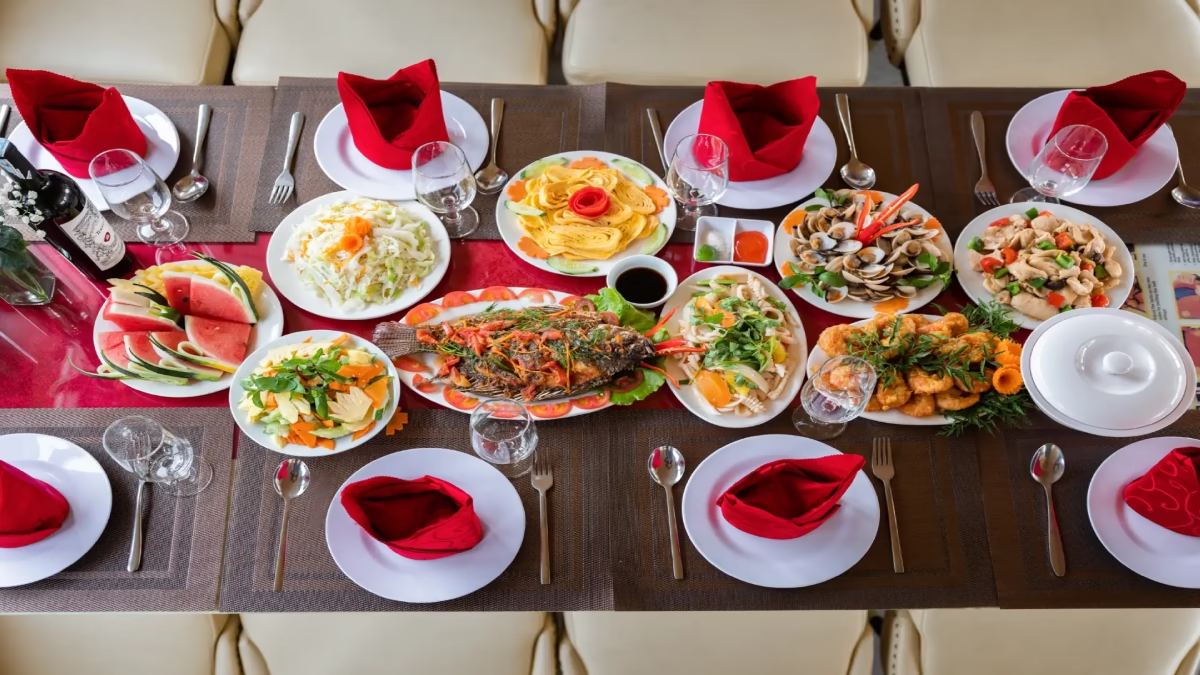
Ha Long Bay cruise meals centre on fresh Vietnamese seafood sourced from local fishing communities — typically grilled and steamed fish, prawns, clams, squid, crab, spring rolls, stir-fried greens, rice, and soup. Meal quality varies significantly by cruise tier: budget cruises serve basic set menus with limited variety, mid-range cruises offer more generous portions and fresher preparation, and 5-star overnight vessels produce multi-course meals that stand among the best dining experiences in northern Vietnam. Vegetarian options are available on request at most operators.
Food is one of the most consistent differentiators between Ha Long Bay cruise tiers — and one of the most reliable indicators of overall operator quality. A cruise operator who invests in fresh ingredients, skilled kitchen staff, and proper meal presentation tends also to invest in vessel maintenance, guide quality, and the other elements that determine whether a Ha Long Bay cruise is memorable or forgettable. This guide covers what you will eat at each price tier, what makes the food special, and how to make the most of the dining experience on the water.
What’s Typically on a Ha Long Bay Cruise Menu
The Standard Ha Long Bay Cruise Menu
Ha Long Bay cruise menus draw on the same culinary tradition across most operators — Vietnamese coastal seafood cooking, prepared simply to let the ingredients speak. The standard dishes you will encounter across most cruise tiers include:
Seafood mains: – Grilled whole fish (typically barramundi, grouper, or sea bass) — the centrepiece of most cruise lunches and dinners – Steamed prawns or tiger shrimp — simply prepared with dipping sauce – Stir-fried clams with lemongrass and chilli – Grilled squid or calamari — often from local squid fishing operations – Steamed or grilled crab (on higher-tier cruises and special occasion upgrades)
Supporting dishes: – Vietnamese spring rolls (gỏi cuốn — fresh, or chả giò — fried) – Stir-fried morning glory or water spinach with garlic – Vietnamese vegetable soup (canh) – Steamed jasmine rice – Fresh fruit platter for dessert (seasonal — dragon fruit, papaya, watermelon, mango)
Drinks: – Filtered water and Vietnamese tea — typically included or provided free on the boat – Soft drinks, beer, and wine — available at bar prices on board; not included in the cruise price
The Luxury Cruise Menu
On 5-star overnight vessels, the menu expands considerably:
- Greater variety of seafood preparations including steamed whole lobster, crab congee, and seafood hot pots
- Vietnamese salads with regional herbs and dressings
- Proper soups — Vietnamese hot and sour seafood soup (canh chua) prepared fresh rather than from a base
- Desserts beyond fresh fruit — Vietnamese sweet soups (chè), coconut-based desserts, and occasionally Western pastries
- Better quality ingredients throughout — locally caught rather than farmed where possible
- Multi-course structure with proper pacing rather than all dishes arriving simultaneously
The Halong Bay All Inclusive Multi Days Tour and Ha Long Bay 2-Days Cruise both operate at this food quality level, as does the Ha Long Bay Luxury Cruise at the day-trip end.
Food Quality by Cruise Tier
| Cruise tier | Meal format | Typical quality indicators |
|---|---|---|
| Budget day cruise | Fixed set menu | Limited variety, often pre-prepared, basic presentation |
| Mid-range day cruise | Set menu, better quality | Fresher seafood, more courses, attentive service |
| Luxury day cruise | Buffet or expanded set menu | Wide variety, quality ingredients, professional presentation |
| Budget overnight | Set menu, 3 meals | Basic but sufficient; seafood often fresher than day tours |
| Mid-range overnight | Set menu, 3 meals | Notably better than budget; fresh ingredients standard |
| 5-star overnight | Multi-course, 3 meals | Restaurant-quality; the best food on the bay |
The jump in food quality from budget to mid-range is the most significant and most commonly noted improvement by guests who have experienced both tiers. The jump from mid-range to 5-star is real but less dramatic — it is a refinement of quality and variety rather than a categorical shift.
The Seafood of Ha Long Bay
Ha Long Bay’s seafood is sourced from a combination of wild-caught fish and aquaculture. The floating villages and fish farms that dot the bay produce grouper, sea bass, tiger prawns, and pearls for export. Wild-caught species include various reef fish, squid, crab, and shellfish taken by the fishing families who have worked the bay for generations. The proximity of the kitchens to the source — often the same day’s fishing — means freshness on mid-range and above cruises is genuinely exceptional.
The context of eating fresh grouper on a boat in the middle of Ha Long Bay — surrounded by the karst formations, within sight of the fish farms where some of the same species was raised — adds a dimension to the meal that no restaurant can replicate. This is one of the genuinely distinctive culinary experiences of Southeast Asia: the food is embedded in the landscape that produces it.
Cá mú (grouper) — the prestige fish of Ha Long Bay, both wild-caught and farmed. Steamed whole grouper with ginger and spring onion is a classic preparation. The flesh is firm, white, and mildly sweet.
Hàu (oysters) — raw or grilled, from the pearl farm operations throughout the bay. Smaller and saltier than French or Japanese oysters, with a clean marine character.
Tôm (shrimp and prawns) — typically grilled on a charcoal brazier on the boat deck, bringing the smoke and char of outdoor cooking to the dining experience.
Mực (squid) — eaten the night after being caught during the squid fishing session on overnight cruises, prepared grilled, fried, or in a quick stir-fry with chilli.
Meals by Cruise Schedule
Day cruise: One included meal — lunch, served on the boat while cruising. Timing is typically 11:30am–1:00pm.
Overnight cruise (2D1N): Three included meals — lunch on day one, dinner on day one, breakfast on day two. The dinner on the evening of day one, served as the boat sits at anchor in a silent cove, is typically the most memorable meal of the cruise.
3-day cruise (3D2N): Five included meals — lunch and dinner on days one and two, breakfast on days two and three. Some operators also include a cooking class as part of the day-two programme.
Ha Long Bay Cruise Vegetarian, Vegan, and Dietary Options
Most Ha Long Bay cruise operators can accommodate vegetarian requirements if notified at the time of booking. A vegetarian set menu typically replaces the seafood mains with additional vegetable dishes, tofu preparations, and egg-based dishes. Vegan options are possible but less reliably accommodated — confirm specifically with your operator. Severe allergies (shellfish, gluten) should be clearly communicated at booking and reconfirmed with the guide on boarding.
Vegetarian: Well accommodated on most mid-range and above cruises when requested in advance. Tofu dishes (đậu phụ), stir-fried vegetables, Vietnamese omelettes, and additional rice and noodle dishes are the standard substitutes.
Vegan: Possible but less reliably executed — Vietnamese cooking uses fish sauce (nước mắm) extensively as a seasoning, including in dishes that appear vegetable-based. If strict vegan requirements apply, communicate this clearly at booking and confirm the specific preparations with the kitchen guide on boarding.
Shellfish allergy: Important to flag clearly, as shellfish is central to the standard cruise menu. Reputable operators can prepare alternatives; budget operators with simple kitchens may have fewer substitution options.
Halal/Kosher: Not standard on Ha Long Bay cruises. If these requirements apply, discuss explicitly with the operator before booking.
Drinks on a Ha Long Bay Cruise
All cruise boats offer drinks for purchase — typically cold soft drinks, beer (Tiger, Bia Hà Nội, and Bia Saigon are common), wine, and water. Prices are marked up from mainland rates — expect to pay 40,000–80,000 VND for a beer and 60,000–120,000 VND for a soft drink. This is normal and expected on a remote water-based operation.
Fresh filtered water and Vietnamese tea are typically provided free or included. On 5-star overnight cruises, a welcome cocktail is usually included on boarding.
Tip: Bring cash in Vietnamese dong for drinks. Card payments are rarely accepted on board outside of 5-star vessels. Budget 100,000–300,000 VND per person per day for on-board beverages depending on consumption.
The Ha Long Bay Sunset Dinner Experience
On overnight cruises, dinner on the evening of day one is served as the boat sits at anchor in a quiet cove. By this point the day-trip boats have returned to port, the central bay is far behind you, and the karst towers are darkening against the evening sky. Dinner in this setting — on the restaurant deck of a wooden junk boat, surrounded by a landscape that has been forming for half a billion years — is consistently cited by overnight cruise guests as one of the most atmospheric meals of their Vietnam trip.
The Ha Long Bay Sunset Cruise is designed specifically around this evening dining experience, pairing a boutique boat with dinner and afternoon tea at sunset. For more on what the cruise menu specifically involves, see Ha Long Bay Cruise Menu.
Frequently Asked Questions
What food is served on a Ha Long Bay cruise?
Fresh Vietnamese seafood is the centrepiece — typically grilled fish, steamed prawns, stir-fried clams, squid, spring rolls, stir-fried greens, rice, and soup. The specific menu varies by operator and cruise tier. Lunch is standard on day cruises; overnight cruises include lunch, dinner, and breakfast.
Is the seafood on Ha Long Bay cruises fresh?
On mid-range and above operators, yes — the proximity of the kitchens to local fishing operations means the seafood is often caught the same day. On budget operators, freshness is less consistent. Recent reviews are the best guide to current food quality on any specific cruise.
Can vegetarians eat well on a Ha Long Bay cruise?
Yes — most operators accommodate vegetarian requirements if notified at booking. The substitute dishes are typically well-prepared and filling. Vegans should communicate requirements clearly and confirm preparations with the kitchen on boarding, as fish sauce is commonly used in Vietnamese cooking.
Are alcoholic drinks included in Ha Long Bay cruise prices?
No — alcoholic beverages are almost never included in the headline cruise price. They are sold at bar prices on board, paid separately in cash. A welcome cocktail is included on some 5-star overnight cruises. Always check the specific inclusions on your booking.
Is the food better on expensive Ha Long Bay cruises?
Yes — food quality is one of the most reliable quality differentiators between cruise tiers. The jump from budget to mid-range is the most significant. Budget operators often serve pre-prepared or bulk-cooked seafood with limited variety; mid-range operators serve fresher ingredients with more courses. 5-star overnight cruises produce multi-course restaurant-quality meals.
