
Caves to Explore in Ha Long Bay
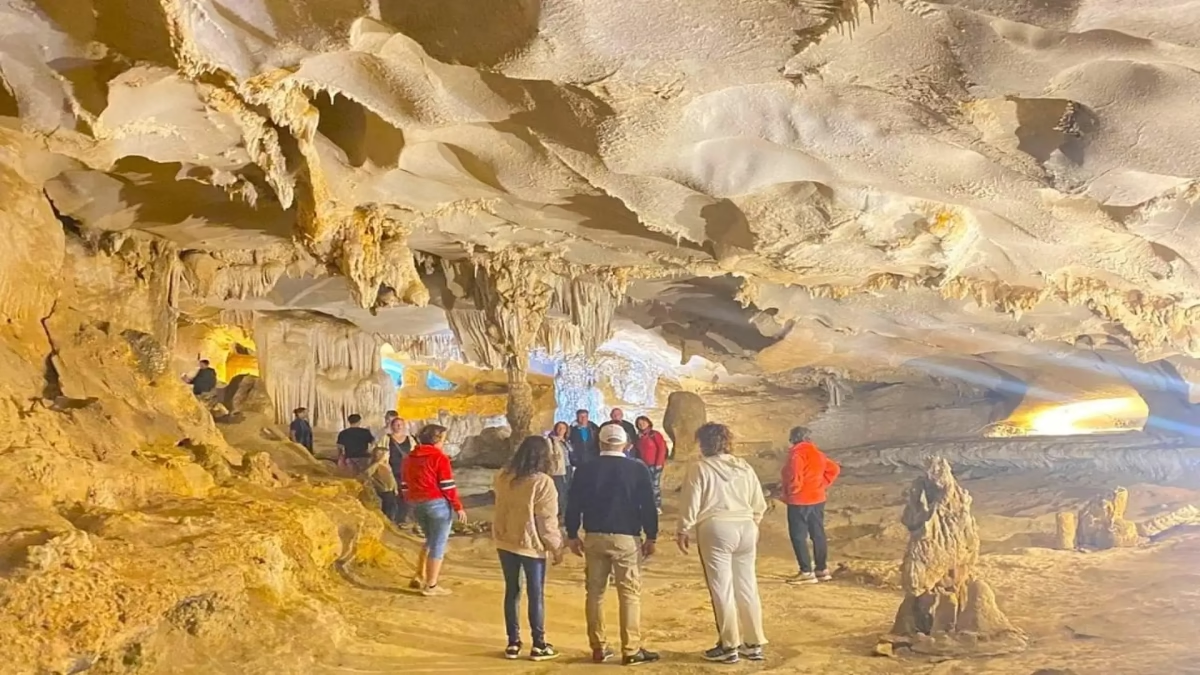
Ha Long Bay contains more than 200 known caves within the UNESCO World Heritage Zone, of which approximately 20 are open to visitors. The most visited are Sung Sot Cave (Surprise Cave) — the largest accessible cave in the bay — and Thien Cung Cave (Heavenly Palace Cave), known for its dramatically lit curtain formations. Dau Go Cave (Wooden Stakes Cave) and Hang Trong (Drum Cave) are less crowded alternatives visited by some operators. Most cruise itineraries include one cave visit.
Ha Long Bay’s cave systems are among the most impressive in Southeast Asia — not because of their scale alone, but because they sit within one of the world’s most dramatic seascapes. Arriving at a cave entrance by boat, walking from bright equatorial light into the cool geological dark, and standing inside a chamber that has been forming for hundreds of millions of years is an experience that stays with visitors long after the cruise itself has faded to a pleasant memory.
This guide covers every major accessible cave in Ha Long Bay: what each one looks like, what makes it distinctive, how crowded it typically is, and which cruise formats give you access to each.
Sung Sot Cave (Surprise Cave — Hang Sung Sót)
Sung Sot Cave is the largest accessible cave in Ha Long Bay and the most visited. It has two chambers — a modest entrance chamber followed by a vast second chamber reaching approximately 10,000 square metres, with stalactites and stalagmites up to 20 metres tall. The name means “Surprise” — a reference to the dramatic contrast between the unremarkable entrance and the enormous interior that opens beyond it. Discovered by French geologists in 1901, it is on every standard Ha Long Bay cave visit list.
- Location: Bồ Hòn Island, central Ha Long Bay
- Size: Two chambers, second chamber approximately 10,000 sq m
- Walk time: 20–30 minutes at a leisurely pace
- Crowd level: High — the most visited cave on the bay
- Lighting: Coloured LED illumination throughout
What you see inside: The first chamber is relatively small, with a low ceiling and initial stalactite formations visible. Stepping into the second chamber — which is not visible from the entrance — produces the “surprise” the cave is named for: a vast domed space with formations of extraordinary scale, including column stalactites reaching from floor to ceiling and curtain formations that appear frozen in mid-drape.
The experience: Sung Sot is the benchmark Ha Long Bay cave visit. Its size means groups spread out naturally inside, reducing the feeling of crowding even during busy periods. The coloured lighting is subjective — some travellers find it enhances the drama; others prefer natural white light. The guide’s commentary covers the geological formation process, the cave’s discovery history, and the identification of named formations that have accumulated whimsical nicknames over decades of tourist visits.
Best for: First-time Ha Long Bay visitors. The scale is unmatched among accessible bay caves.
Included on: The Halong Bay Cruise with Sung Sot & Ti Top Island specifically includes it. Many other overnight and day cruises visit Sung Sot as their primary cave stop.
Buy This TicketThien Cung Cave (Heavenly Palace Cave — Hang Thiên Cung)
Thien Cung Cave is smaller than Sung Sot but widely considered the most visually dramatic in terms of formation density and lighting quality. Its name means “Heavenly Palace” and the interior — with layered curtain stalactites, column formations, and coloured lighting — justifies the name. The cave was discovered in 1993 and has been one of the bay’s most popular attractions since its opening to visitors in 1998.
- Location: Dau Be Island, central Ha Long Bay — close to Sung Sot Cave
- Size: One main chamber, approximately 250 metres in length
- Walk time: 15–20 minutes
- Crowd level: High — one of the bay’s busiest caves
- Lighting: Coloured LED illumination
What you see inside: Thien Cung is characterised by the density and variety of its formations. Curtain stalactites — thin, translucent sheets of calcite hanging from the ceiling like frozen fabric — are particularly pronounced here. The ceiling height varies dramatically through the cave, creating moments of intimate low-ceiling passages followed by larger vaulted chambers. A small underground pool reflects the overhead formations, creating mirror images that make for compelling photographs.
The experience: Many guides and experienced bay visitors consider Thien Cung superior to Sung Sot for photography, despite its smaller size. The formation quality is exceptional and the lighting — while still coloured — is more subtly applied than in Sung Sot. The cave is also slightly less crowded than Sung Sot because some operators divert to Sung Sot, leaving Thien Cung with shorter queues on busy days.
Best for: Photographers, architecture and formation enthusiasts, and return visitors who have already seen Sung Sot.
Dau Go Cave (Wooden Stakes Cave — Hang Đầu Gỗ)
One of Ha Long Bay’s largest cave systems, Dau Go has three interconnected chambers with high ceilings and a wide variety of stalactite and stalagmite formations. Its name comes from the sharpened wooden stakes allegedly stored here in the 13th century by Trần Hưng Đạo before his famous naval victories against Kublai Khan’s Mongol forces — one of the most significant historical associations of any bay cave.
- Location: Dau Go Island, central Ha Long Bay
- Size: Three chambers
- Walk time: 25–35 minutes
- Crowd level: Moderate — less visited than Sung Sot and Thien Cung
- Lighting: Coloured LED illumination
Best for: Travellers interested in the historical dimension of the bay’s landscape, and those who want a cave visit with fewer other tourists.
Hang Trong (Drum Cave)
A smaller cave whose name comes from the hollow drumming sound made by wind passing through it. Hang Trong is visited less frequently than the three major caves and has a more intimate character — one main chamber with natural (not artificially lit) light entering through openings in the cave roof.
- Walk time: 10–15 minutes
- Crowd level: Low — rarely included in standard itineraries
- Lighting: Natural light from ceiling openings plus minimal artificial lighting
Best for: Travellers who have visited the major caves before and want something more off the beaten track.
Caves in Lan Ha Bay and Bai Tu Long Bay
For cruises that access the outer bay areas, additional cave systems are available — less famous, less crowded, and in many cases equally impressive:
Dark and Bright Cave (Hang Tối và Hang Sáng) — an interconnected pair of caves in Lan Ha Bay, one accessible only by kayak through a narrow entrance. Paddling through a dark passage and emerging into a lit internal chamber ringed by karst walls is one of the most memorable experiences available in the wider bay area. Accessed on Ha Long Bay to Lan Ha Bay Cruise itineraries.
Ba Hang Cave — a three-chambered cave in the Bai Tu Long Bay area, visited on some multi-day itineraries accessing the outer bay.
What to Expect on a Ha Long Bay Cave Visit
Ha Long Bay cave visits last 15–35 minutes depending on the specific cave and the guide’s pacing. All accessible caves have lit walkways with handrails at key sections. Floors are uneven limestone — sometimes wet, always irregular. Closed-toe shoes are strongly recommended. The caves are cool (around 20–22°C) and humid. Photography is permitted throughout. Tripods are impractical due to walkway width and group pace.
Practical tips for cave visits: – Wear closed-toe shoes with grip — cave floors are wet limestone with irregular surfaces – Bring a light layer — the temperature drop from outdoor heat to cave interior can be 8–12°C – Allow your eyes to adjust at the entrance before walking — the contrast from bright sunlight is significant – Listen to the guide for context — formation names, geological explanations, and historical associations are usually more interesting than they sound in advance – Photography: phone cameras perform well in cave lighting conditions; bring yours fully charged – No flash required — the LED cave lighting is sufficient for most phone cameras
Frequently Asked Questions
Which cave is best to visit on a Ha Long Bay cruise?
Sung Sot Cave (Surprise Cave) is the most impressive for sheer scale and is the recommended choice for first-time visitors. Thien Cung Cave (Heavenly Palace Cave) is favoured by photographers and return visitors for its formation density and lighting quality. If your cruise visits only one cave, Sung Sot is the benchmark.
How many caves can you visit on a Ha Long Bay day cruise?
Most day cruises include one cave visit. Some itineraries — particularly private or longer day tours — may include two. Overnight cruises typically include one cave on day one and sometimes a second on day two. The Islands & Caves Ha Long Cruise with Lunch & Kayaking is specifically structured around maximising cave and island time.
Are the Ha Long Bay caves artificial or natural?
Entirely natural — formed over hundreds of millions of years by the dissolution of limestone through rainwater and carbon dioxide. The lighting inside the caves (coloured LEDs) is artificial, but the formations are entirely geological. No artificial structures have been added to the cave interiors beyond the walkways, handrails, and lighting.
Is it safe to visit caves on a Ha Long Bay cruise?
Yes — all accessible caves have lit, marked walkways with handrails at key sections. Guides lead the group and ensure no one falls behind. The main practical hazard is the uneven, wet limestone floor, which requires sensible footwear and attentive footing.
Are Ha Long Bay caves accessible for people with limited mobility?
Partially. The major caves (Sung Sot, Thien Cung) have concrete walkways throughout, but these involve steps and inclines that are challenging for mobility-impaired visitors. Some sections have steep stairs with no alternative route. If mobility is a concern, confirm the specific accessibility requirements of your intended cave with the operator before booking.
What is the temperature inside Ha Long Bay caves?
Approximately 20–22°C year-round — significantly cooler than the outdoor temperature in summer (when outdoor temperatures can reach 34–35°C) and comparable to or slightly warmer than winter outdoor temperatures. A light layer is useful for summer visitors.
